
Going to the Doctor in Portugal: SNS Survival Phrases That Actually Help
Published on 2026-07-09
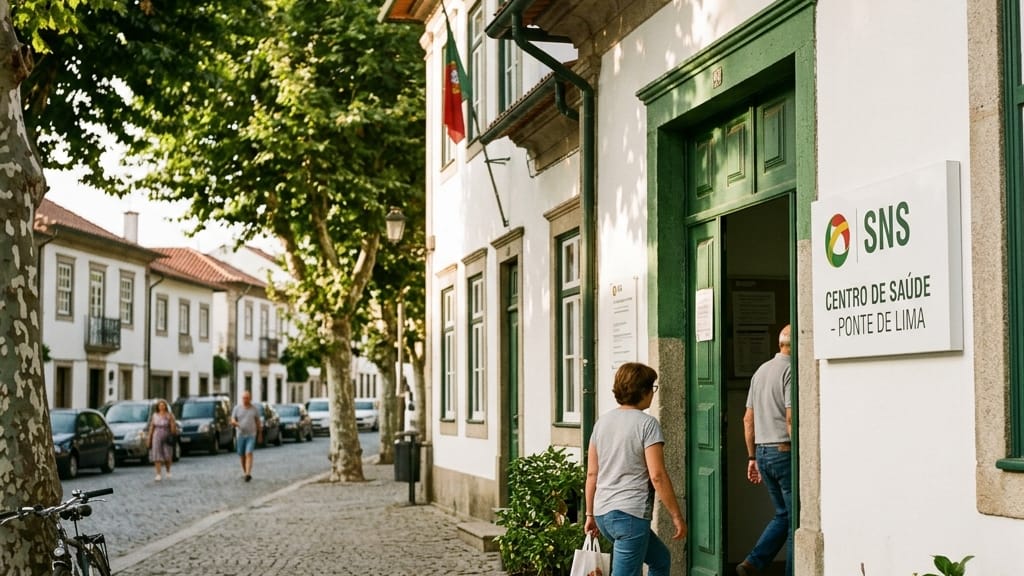
There is a special kind of loneliness in sitting in a Portuguese waiting room, hearing your name called — mangled, but recognizably yours — and realizing the next ten minutes of your health depend on vocabulary you never got around to learning.
If you live in Portugal, sooner or later you'll meet the SNS (Serviço Nacional de Saúde), the national health service. The system is good, affordable, and runs almost entirely in European Portuguese. This guide walks through where to go, what they'll ask, and the exact phrases that carry you from reception to prescription.
Centro de Saúde, Urgências, or Pharmacy?
Portugal sorts healthcare into three doors, and choosing the right one saves hours:
| Where | What it's for | The word you'll hear |
|---|---|---|
| A farmácia | Minor complaints — colds, aches, sunburn | "Tem alguma coisa para...?" |
| O centro de saúde | Your local SNS clinic: appointments, the family doctor, renewals | a consulta |
| As urgências | The hospital ER — real emergencies only | a triagem (triage) |
For anything mild, start at the pharmacy — Portuguese pharmacists are the first line of healthcare, and our farmácia guide covers that whole conversation. For everything in between, there's a fourth door that expats chronically underuse: SNS 24 (808 24 24 24), the health line that triages you over the phone and can issue advice, e-prescriptions, and ER referrals. They have English-speaking staff — but the menu and the hold music are in Portuguese, so knowing "queria falar com um enfermeiro" (I'd like to speak with a nurse) gets you moving.
How Do I Book an Appointment?
At the centro de saúde reception, or by phone, the magic verb is marcar (to book):
"Bom dia. Queria marcar uma consulta com o médico de família."
("Good morning. I'd like to book an appointment with the family doctor.")
The receptionist's likely responses:
- "Tem o número de utente?" — Do you have your health-service user number? (Get this number early; it unlocks everything.)
- "Pode ser na quinta às dez?" — Could it be Thursday at ten?
- "Está marcado." — It's booked.
If it can't wait for a regular slot, ask for uma consulta aberta (open/same-day consultation) — many health centers reserve morning slots for acute cases.
What Will the Doctor Ask Me?
Portuguese medical consultations follow a script. The doctor will use the formal register — o senhor / a senhora — and the questions arrive in a predictable order:
- "O que o traz cá?" — What brings you here?
- "O que sente?" — What are you feeling?
- "Há quanto tempo se sente assim?" — How long have you felt like this?
- "Tem alergias?" — Do you have allergies?
- "Toma alguma medicação?" — Are you taking any medication?
That third one matters: answer with há + time: "Há três dias" (for three days), "Há uma semana" (for a week).
Advertisement
Describing What Hurts
The backwards verb doer (to hurt) does the heavy lifting — the body part is the subject:
- "Dói-me a cabeça / a garganta / a barriga." — My head / throat / stomach hurts.
- "Doem-me as costas." — My back hurts. (Costas is plural, so is the verb.)
- "Dói-me aqui." — It hurts here. (Pointing is legal and encouraged.)
For everything else, ter and sentir:
- "Tenho febre / tosse / tonturas." — I have a fever / a cough / dizziness.
- "Sinto-me fraco / fraca." — I feel weak.
- "Estou constipado / constipada." — I have a cold. (The famous false friend — it does not mean what English speakers fear.)
- "Vomitei duas vezes." — I vomited twice. (Glamorous, no. Useful, yes.)
The End of the Consultation
Listen for these closing moves:
- "Vou passar-lhe uma receita." — I'm going to write you a prescription. (It arrives by SMS as a code you show at any pharmacy.)
- "Vou pedir análises." — I'm ordering blood tests.
- "Precisa de baixa?" — Do you need sick leave? A baixa médica is the official doctor's note Portuguese employers expect.
- "Volte se não melhorar." — Come back if it doesn't improve.
Your two power phrases for the whole visit:
"Pode falar mais devagar, se faz favor?" — Can you speak more slowly, please?
"Pode escrever isso?" — Can you write that down?
No doctor in Portugal has ever been offended by either.
What About the Urgências?
If it's serious, go to the hospital ER or call 112. At the urgências you'll pass through a triagem (triage) and get a colored wristband — the pulseira — that sets your priority: red and orange are urgent; green and blue mean you'll be reading the entire waiting-room poster collection. For a non-emergency, the centro de saúde or SNS 24 will get you care faster — and with less Portuguese shouted across a corridor.
Quick Questions
Do doctors in Portugal speak English?
Many do, especially younger doctors in cities. But receptionists, triage nurses, and phone menus mostly don't — and they're the gatekeepers. The phrases above are for the doors, not just the doctor.
How much does an SNS appointment cost?
SNS care is free or nearly free at the point of use for registered residents — most user fees (taxas moderadoras) for primary care have been abolished. Private clinics run €40–100+ a consultation, often with shorter waits.
What is the "número de utente" and how do I get one?
It's your SNS user number, issued at your local centro de saúde once you're a registered resident. Bring your residence permit, NIF, and proof of address — and expect the whole conversation to be in Portuguese.
Can I just go to a private doctor instead?
Yes, and many expats do. But the vocabulary is identical — marcar uma consulta, dói-me, a receita — so the Portuguese above pays for itself either way.
Want this as a structured lesson with the body parts and the doer drills? It's free: At the Doctor (SNS). The full beginner path is in our free European Portuguese lessons.
Advertisement
Start Learning Today
Join PortuTalk to unlock interactive lessons, listening exercises, and more.
Sign up for FreeNo credit card required.